
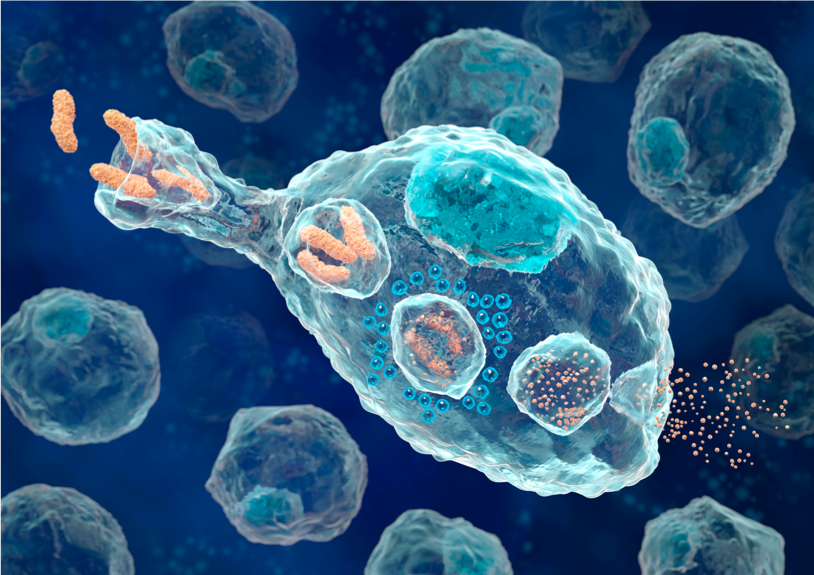
What Are Macrophages? Why They Matter for Healthy Immunity
When people think about the immune system, they often picture white blood cells fighting off bacteria and viruses.
While that is true, one group of immune cells deserves special attention for its role in supporting the body every day:
macrophages.
Macrophages are among the first responders of the immune system. They help defend against harmful invaders,
remove damaged cells, support tissue repair, and coordinate immune activity.
More importantly, macrophages help maintain immune balance rather than simply making the immune system
“stronger.” Understanding how macrophages work can provide valuable insight into immunity, inflammation,
and healthy ageing.
What Are Macrophages?
Macrophages are a type of white blood cell that belongs to the body’s
innate immune system, which acts as an early line of defence against infection and injury.
The word macrophage comes from Greek words meaning “big eater.” This name reflects one of their
primary functions: surrounding, engulfing, and breaking down unwanted materials through a process known as
phagocytosis.
Macrophages help identify and remove:
- Bacteria and other potentially harmful microorganisms
- Dead or damaged cells
- Cellular debris
- Foreign particles
By continuously monitoring and cleaning the body’s tissues, macrophages contribute to normal immune function
and help maintain a healthy internal environment.
More Than Just Clean-Up Cells
Although macrophages are well known for engulfing pathogens and cellular debris, their role extends far beyond
simply destroying unwanted material.
Macrophages also help:
- Communicate with and coordinate other immune cells
- Regulate inflammatory responses
- Support wound healing and tissue repair
- Remove ageing or damaged cells
- Present antigens to cells involved in adaptive immunity
In this way, macrophages act as both defenders and coordinators within the immune system. Their role is not
simply to increase immune activity, but to help produce an appropriate response for the situation.
Why Macrophages Matter as We Age
As we get older, the immune system gradually changes. Researchers commonly refer to age-associated changes in
immune function as immunosenescence.
Ageing is also associated with a persistent, low-grade inflammatory state that is sometimes called
inflammaging. Inflammation is a normal and necessary part of immune defence, but prolonged or
poorly regulated inflammation may affect long-term health.
Because macrophages are involved in both immune defence and inflammatory regulation, researchers continue to
investigate how macrophage function changes with age and how these cells may influence healthy ageing.
Supporting Healthy Macrophage Function
The immune system is highly complex, and no single food, nutrient, or supplement can replace the foundations of
a healthy lifestyle.
General habits that support normal immune function include:
- Eating a balanced and nutrient-rich diet
- Participating in regular physical activity
- Prioritising consistent, quality sleep
- Managing ongoing stress
- Avoiding smoking
- Maintaining a healthy body weight
These everyday habits help create an environment in which immune cells, including macrophages, can perform
their normal functions.
Ongoing Research Into Macrophage Activation
Macrophages remain an important area of scientific investigation. Researchers are studying how macrophage
activity relates to immune regulation, inflammation, tissue repair, brain health, and healthy ageing.
One area of research involves Macrophage Activating Factor (MAF) and its potential relationship
with normal macrophage function and immune regulation.
Research in this field is ongoing, and further investigation is needed to understand the biological mechanisms,
potential applications, and limitations of different forms of MAF.
At Saisei Australia, we are committed to sharing science-led educational information about macrophages,
immune health, and longevity research as new evidence emerges.
Learn More About Immune Balance
A healthy immune system is not necessarily one that is constantly more active. It is one that can respond
appropriately, regulate inflammation, and return to balance when the response is no longer needed.
To learn more, read:
Immune Balance vs. Immune Boosting: What’s the Difference?


You May Also Like

Our Article Has Been Accepted for Publication in Frontiers in Nutrition

What Is Inflammaging? How the Immune System Changes With Age